
• Facebook
  • Google+
  • Linkedin
  • Twitter

Aris Industries

586-725-8100

  • Home
  • What We Do
    • Site Management
    • Site Services
    • Site Safety
    • Industrial Safety News
  • About Us
    • Company
    • Qualifications
  • Contact
  • Dynamic Solutions by Industrial Professionals

Long Lasting Relationships in Manufacturing

October 3, 2015 By Jason Eelbode

LongTerm Relationships in Manufacturing

From manual equipment to CNC machining to lights out manufacturing,
Dial Machine’s relationship with OEMs spans 50 years
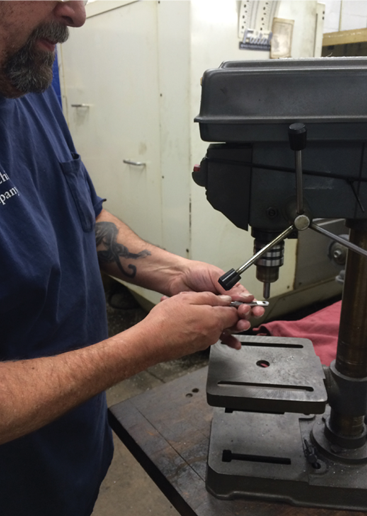
LongTerm Relationships in ManufacturingWhile longevity – measured as years in business with consistent ownership – is not a typical requirement for OEMs in choosing a precision metal parts manufacturer, there are some significant reasons why it should be considered along with the usual quartet of quality, delivery, turnaround and price.

Longevity does impart certain, undeniable facts. In an era where many machine shops have gone out of business or changed hands as parts manufacturing moved overseas, those that have survived could only do so by being lean and delivering consistent value.

Often, this meant adapting by moving to more precision, low tolerance work that remained in the U.S. To win this business, shops were forced to recruit or retrain skilled operators from a diminishing pool while continually investing in the latest CNC equipment over time. This meant spending more money to stay ahead of the curve when many jobs were becoming “lowest bid wins.”

For industries that are more price-sensitive, competition amongst the quality shops was fierce and the only way to stay in business was to deliver consistent quality, on time – every time. Fail do so, and another precision shop is there to take its place.

In other words, longevity – particularly when measured in decades – is like a gauntlet that only the strong survive. Not many can lay claim to being in business for the past 20, 30, 40 or more years.

50 years in business, 50 year customer

One metal parts supplier able to negotiate the rigors of the industry, and of time, is Dial Machine Company (dialmachine.net), a full service precision machine shop offering custom metal and plastic components. The company has operated under the same family ownership and retained long term skilled operators for the past 50 years.

If the company’s 50-years in business is impressive, perhaps more so is that Dial Machine has maintained a continuous 50-year relationship with the same customer, King Tester Corporation, a pioneer of Brinell hardness testing equipment.
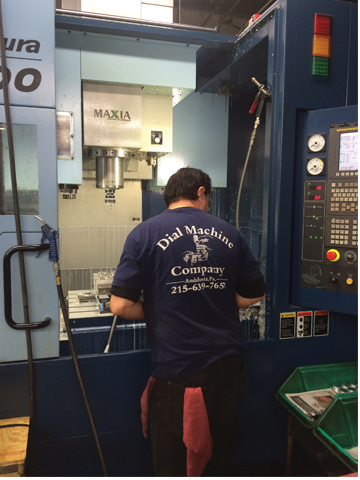
LongTerm Relationships in ManufacturingGiven the failure rate of manufacturers, revolving door ownership or management (often that make sweeping changes, including where they get their parts), changes in the industry, competitors looking to steal away business by offering a lower price, any machine shop will acknowledge that retaining a customer over decades is perhaps even tougher than staying in business.

The relationship between these two companies is unusually long for its time frame and cooperation. During that time, they have witnessed many changes in the industry, most notably the introduction and evolution of CNC machining.

“In the 1980s, machining had reached its limits, with rising quality demands and many skilled machinists retiring,” says Ernest Biddle, King Tester’s V.P. of Sales and Marketing. “Dial Machine was our first supplier to use CNC machines to enhance and extend quality machining. We supported this technical revolution and co-signed their loan for CNC equipment, because fast, accurate production of our test head was critical to our business.”

Since 1965, Dial Machine has been the primary parts supplier for the King portable Brinell hardness tester, providing parts for its hydraulic test head, body, and base. Dial handles not only primary processes such as CNC machining, metal fabrication, lathe and milling operations, but also secondary machining, finishing, coating, deburring, grinding, and some assembly.

Biddle acknowledges the role of John Giordano, co-owner of Dial Machine and son of its founder Anthony, in helping to produce the world’s first commercially viable, automatic Brinell microscope, King Tester’s King Scan®, which since 1987 has gone through a number of iterations and improvements.

Despite the role that longevity can play in an OEM choosing an experienced metal parts manufacturer, simply being around a long time isn’t enough when it comes to precision parts. With each new generation of CNC equipment, the precision and speed increases and companies such as Dial Machine must continue to invest in new machines while refining their techniques.

“On key parts of our portable Brinell hardness tester, such as the process of making test heads, Dial Machine works to very tight tolerances,” says Simon Focht, King Tester’s Operations Manager. “From a raw casting, a block of stainless steel, it essentially machines the exterior and interior in fine detail. At another point, it machines and drills a block of aluminum, using CNC equipment to achieve several tasks at the same time.”

Recently, Giordano also suggested design improvements to tighten the mating fit between two elevating screws and nuts on the King Brinell hardness tester base. “With the improved tolerance of the custom mating fit, the carriage runs up and down as precisely as possible with increased longevity,” says Focht.

Staying Current
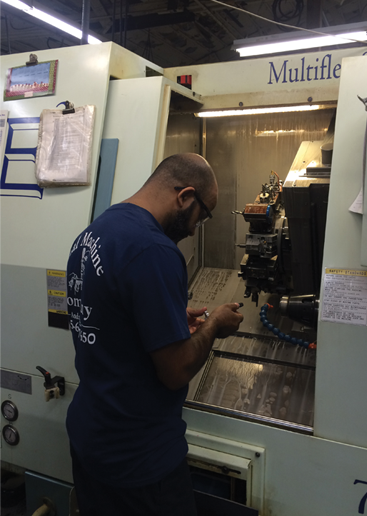
LongTerm Relationships in Manufacturing“A machine shop has to prove itself every day,” agrees Jim Guba, Vice President of Engineering at IMAC Systems. His company, which has worked with Dial Machine for the past 5 years, provides products and services to the gas measurement and precision machining industry since its establishment in 1978. “They continue to improve their business and bring in the latest, state-of-the-art CNC equipment.”

Although IMAC Systems has invested in sophisticated CNC equipment – including two new CNC lathes totaling $500,000 to add to two CNC lathes, a milling machine, and a machining center – it still sees the value of outsourcing its most complex parts to a precision shop like Dial Machine.

Although they could manufacture the parts, they prefer to use in-house equipment to make the majority of less-complex parts – a job that requires the full attention of their current long-time CNC operator.

The complex parts Dial Machine makes include the upper and lower housings of a high-pressure stainless steel filter, which protects expensive downstream gas equipment from dangerous line debris. The tolerances for the high-pressure filter can range from 0.0005” to 0.005” in 316” stainless steel.

“We’ve never had a reject from any part they’ve made for us in five years,” says Guba.

Lights Out Manufacturing

Despite Dial Machine’s long, successful OEM relationships, the company is not resting on its laurels. To gain even greater operational efficiency, it has gone beyond CNC machining to lights out manufacturing.

Lights out manufacturing is a trend where CNC equipment is set up to make parts overnight or longer, while staff is not around. This can speed part turnaround while also reducing labor costs, which can be passed on to the customer.

The technique often improves OEM production flexibility as well, leaving fully manned CNC equipment for day shifts to produce more complex parts that may require more tooling changeovers and monitoring.

As much as 80% of the work Dial Machine performs can be run as lights out manufacturing, provided that lot quantities are sufficient. These automated machines have automatic magazine bar feeders and safety mechanisms on them. This allows the company to run multiple shifts per day, including an unattended overnight shift, which can dramatically decrease OEM lead times and part costs.

“With CNC and lights out manufacturing capability as well as expert machinists, Dial Machine is helping to keep our company on the cutting edge of quality, delivery, and price,” concludes Biddle.

For more information, please visit:
www.dialmachine.net

Or contact:
dialmachoffice@verizon.net 

The post Long Lasting Relationships in Manufacturing appeared first on Industrial Machinery Digest.


Full article: Long Lasting Relationships in Manufacturing
Source: Industrial Machinery Digest

Filed Under: Industrial Safety News Tagged With: Industrial

Reduce Overhead with Energy Storage Technology

October 2, 2015 By Jason Eelbode

EnegyStorageTechnologyHeader2

ShoEi Foods USA, Inc. operates a major food processing operation. Nearly 1,000 acres of prunes and walnuts are handled annually at the Olivehurst, California facilityy. In addition to its processing plant, the business requires energy intensive refrigerated warehouses that operate around-the-clock.

Knowing that improved energy management would directly impact the bottom line, as well as underscore the company’s commitment to sustainability, ShoEi’s executive team began a search for the best solutions to reduce energy use. They originally looked to solar, and engaged Cenergy Power after a competitive solicitation. When Cenergy Power saw ShoEi’s energy profile they knew a combined solar-storage solution would help ShoEi save more than solar alone.

A Creative Approach to Access Lower Rates
Cenergy partnered with Stem to scope out a combined solar-storage energy management system for ShoEi. As Stem’s team of energy consultants reviewed the company’s energy profile, they identified a lucrative opportunity for ShoEi to apply Stem’s software plus storage solution to modify their energy profile and qualify for a more cost-effective rate plan.

For businesses, electric bills include two main components: energy charges, based on the total amount of energy used during the month, and demand charges, which are based on the maximum amount of energy used at any one time during the month. Businesses that can consistently keep their maximum demand under a certain level, decreasing their energy provider’s cost to serve them, can switch to a more advantageous rate plan. By integrating solar to offset daytime energy use and storage to lower demand charges and stay under the specified limit, ShoEi would save an estimated $6,000 per month.

Stem proposed the rate switch plan to ShoEi, and shortly after, Stem and Cenergy Power were awarded the project.

Software & Storage: An  Effective Line of Defense
In order to move to the preferable rate class, ShoEi would have to stay below the qualifying maximum demand level of 500kW for one full year. Stem’s real-time software added a level of precision to ShoEi’s operations that proved critical to maintaining consistent control over energy usage.

“Real-time is key, especially when every 15-minute interval counts. If you have one 15-minute interval in a month that exceeds maximum demand for your current rate, it’s a strike against you. If you get three strikes in consecutive months, batterySidebaryou’re back up to the higher rate immediately,” said Dwight Davis, ShoEi Foods USA’s facility and plant manager.

To begin integrating its energy management technology into ShoEi’s daily operations, Stem first activated its software to help ShoEi gain better visibility into the facility’s energy usage. The software enabled ShoEi to understand the energy impacts of specific equipment, identify patterns, and make adjustments to smooth usage peaks throughout the day.

Next, Stem installed its storage system. The software and battery work in concert to lower ShoEi’s maximum demand: when the software detected a spike in energy usage that would cause ShoEi to exceed the 500kW demand threshold, it automatically sent a text message notifying ShoEi facility managers, who could then choose to reconfigure operations and reduce demand. Concurrently, Stem’s storage units automatically released stored energy, which bought more time for the team to make the necessary adjustments.

A Complex Cost Reduction Strategy Made Simple
With precise planning and close cooperation with Stem’s team of energy consultants, ShoEi was able to switch to a more cost-effective rate in the minimum possible time— one year.

“We told Stem what we wanted to achieve and they made it happen: Stem’s software collected the data that was needed to make a plan precise enough to hit our goal. When we finally cleared the mark and moved down to the lower rate, we actually jumped for joy. Now we save about $6,000 per month as a result,” said Mr. Davis.

“Stem’s storage acts as a first line of defense,” said Mr. Davis. “It gives us time to make adjustments that ultimately make or break ou  r ability to meet the requirements for the lower rate.” The Stem system automatically produces savings and also provides ShoEi’s team with valuable insight into its energy data.

“Now that we understand our energy patterns, I don’t feel like I have to monitor the system every day to know that our energy usage is in check. I try to look at least once a week, though I don’t normally need to.” Mr. Davis commented.

Persistent Savings Despite Facility Expansion
A few months after successfully switching to the new rate class, ShoEi made large-scale facility upgrades to increase their overall throughput and increased their horsepower by more than 50 percent, threatening to push them over the 500kW limit. Stem worked closely with ShoEi to refine the system and help them optimize operations to stay below the threshold, despite the near doubling of energy flowing through the facility. With Stem’s software and storage as a safety net, ShoEi has successfully maintained its current rate tier without a single misstep.

“Stem was up for the challenge. They’re problem solvers and we knew they could make the rate switch work for us even with the new facility. We had confidence in the people, and in the software. Not just any energy management software could do this, but we knew Stem’s could. This scenario proves that with Stem’s technology, you can do more with less,” said Mr. Davis.

For more information, please visit:
www.stem.com. 

The post Reduce Overhead with Energy Storage Technology appeared first on Industrial Machinery Digest.


Full article: Reduce Overhead with Energy Storage Technology
Source: Industrial Machinery Digest

Filed Under: Industrial Safety News Tagged With: Industrial

Highway to the Factory of the Future

October 1, 2015 By Jason Eelbode

Highway Factory Future

By Larry Korak, Director of Industry & Strategy, Industrial Manufacturing, Infor

Tech-savvy manufacturers have learned they can turn to IT solutions to solve their most pressing operational pains. Based on decades of witnessing launch after launch of new IT solutions, they know there is bound to be a bigger-better-faster application to be rolled out by solution providers at the next major trade event, like the upcoming FabTech show.

Wise manufacturers also know that bigger-better-faster applications are not enough. Simply adding more bells and whistles added to the ERP solution can’t transform a bottom line performance report.  Complicating an already stressed IT infrastructure only accelerates the imminent implosion. Investing in add-on solutions and specialized point applications can be like putting a two-inch bandage on a fractured arm.

Foreseeing the Future

While short term solutions for the various operational ailments are tempting, they can mask the underlying broad issues. The big picture issues of Interoperability, deployment, and advanced ERP functionality must be addressed first.

In order to truly optimize the IT infrastructure of a manufacturing plant, there must be an underlying strategic plan and vision of the future. In other words, you must know where you want to go before you start off on the journey. Connections have to be synchronized.

The future of manufacturing is fuzzy, but promising. Media hype promises a brand new world of interconnected devices, scanners communicating with the global supply chain and data analysis which can predict the day and time when your next customer will contemplate a purchase. Are these game-changing marvels of technology realistic to expect and can a manufacturer choose one highsizzle IT solution which is the turn-key answer?

Yes and no. The optimistic view of a future manufacturing world where devices people and process are all connected to create customercentric operations that run with automated harmony—and profits—is attainable. The technology exists. The desire exists. The ways and means can be put in motion. Is there one magic bullet to achieve this? No. The Factory of the Future will deploy several technologies in order to be on the forefront of innovations and competitive prowess. Cloud deployment, mobile connectivity, Big Data analytics, sensor reading capabilities, shop floor automation, and supply chain visibility are among the critical applications that will combine to create the uber-efficient manufacturing plant of 2020.

Interoperability

In the recent past, integration was the buzz word used to refer to the ability of the multiple systems to connect and provide real-time visibility. While those are still important considerations, system experts are now stressing interoperability as the new hallmark to achieve. Interoperability refers to the interaction of systems, an important step beyond the ability to access and view data. Systems must be able to receive, communicate, and apply decision-making logic to shared data in order to automate actions. Automation is the key word. For manufacturers to overcome growing labor skill gaps, competitive pricing pressures, and product configuration demands, tasks must be automated. Decisions must be automated. Even responses to ad hoc non-compliance alerts must be streamlined.

In order to achieve that level of automation and decision-making efficiency the various operational branches must connect, consume, apply data logic and the resulting insights. That’s not your father’s financial management or ERP system.

Deployment

Deployment is the next foundational issue to be considered when devising a strategy for the Factory of the Future. There is no denying that the growing acceptance of cloud solutions is dramatically changing the IT landscape. Cloud-based solutions are here and here to stay, and not just for the edge applications. Manufacturers are turning to cloud deployment for their critical ERP solutions at adoption rates much higher than anticipated by some skeptics.

Almost two-thirds of manufacturing firms have at least two applications residing in public or private clouds, and say they will pursue “cloud-first” or “cloud-also” strategies in the future, according to a recent study from IDC Manufacturing Insights.

The study, “Worldwide Cloud Adoption in the Manufacturing Industry,” is based on data from surveys such as IDC’s 2014 CloudView Survey, which quizzed 593 manufacturers in 17 countries.

Highway_sidenote2Why are manufacturers taking this leap to the cloud? Manufacturing  leaders are pragmatic and practical professionals who understand the return on investment (ROI) benefits. The data simply points to cloud deployment as the answer to the issues of agility, ease of implementation, cost control, and the need to stay modern—without the hassles of upgrading modifications.

According to an IDG survey of senior IT decision makers, 73 percent believe cloud will increase speed of service delivery. Another 82 percent say cloud will enable new and efficient ways to reach customers.3

The vast storage capabilities provide the icing on the cake. Modern cloud computing opens new opportunities for storing vast amounts of data, whether it is historical records from legacy solutions or lakes of raw data collected from data sensors embedded in equipment, on consumer products, or within the workings of internal assets.

Cloud storage makes the Internet of Things (IoT) manageable. IoT strategies will likely be a key influencer in most manufacturers’ future got-to-market plans. It be near impossible to avoid the impact—and the resulting pressures to keep up with changing market conditions that will emerge from IoT innovations. We are still in the infancy of defining the true potential, but early glimpses and use cases are already staggering.

McKinsey1 cites the example of data collected from an oil rig. Now one rig can contain as many as 30,000 separate sensors that track a wide range of conditional and operational variables, like temperature, vibration, flow etc.  It’s estimated that only 1 percent of the data points are examined in this early stage of adoption. Today’s goal is to simply detect and control anomalies—not to go examine optimization and prediction, which is where the greatest value will be achieved.  McKinsey predicts IoT technologies could unleash $11.1 trillion in new economic value worldwide by 2015.2

Advanced ERP Functionality

No matter what smart manufacturing initiatives you deploy the actions and consequences must be tracked, analyzed and reported. The ERP solution still provides the critical last step in keeping the manufacturing plant operating and tracking financial transactions as well as inventory, supply chain, account management, human capital and logistics. A long list of other departmental needs, such as aftermarket service, product configurations, plant maintenance, and lifecycle management, may also be integrated and assigned to the ERP tier.

Basic functionality that may have been sufficient to run a plant in the last decade must be amped up. Because optimizing resources—including time of personnel is so essential— usability has become a focus of modern solutions. Today, ERP solutions feature intuitive screens which push relevant contextual data to the user. The software anticipates questions, provides proactive suggestions, and alerts decision makers at the earliest signs of non-compliance to a prescribed process flow.

Modern ERP solutions have also broken the traditional shackles of time, place, and connectivity. Personnel can now access critical data 24/7 using smart devices. They can also easily collaborate using business social tools with colleagues, contractors, and customers.

Besides being mobile and social, modern ERP solutions have vertical industry functionality built in and automate complexities such as regulation compliance, strict quality control standards and Engineer-to-Order (ETO) processes.

Where to Begin?

While manufacturers may recognize the need for interoperability, cloud deployment and advanced ERP functionality, they may be overwhelmed when it comes to making IT purchases. The abundance of choices and the high stakes can be intimidating.

The IT decision makers – along with chief officers – must agree upon priorities and establish the must-have goals. Events like FabTech provide an opportunity to kick the tires on a wide assortment of solutions for manufacturing optimization. Some will tout the bells and whistles. Some will focus on the engine. Some with highlight the short term benefits.

The truly tech savvy manufacturing professional will be able to navigate the clutter and stay focused on the roadmap. Keep your eye on the road and watch for the critical landmarks: interoperability, deployment and ERP functionality.

The post Highway to the Factory of the Future appeared first on Industrial Machinery Digest.


Full article: Highway to the Factory of the Future
Source: Industrial Machinery Digest

Filed Under: Industrial Safety News Tagged With: Industrial

Seco Donates Tools to School Shop-Training Programs

October 1, 2015 By Jason Eelbode

With great emphasis on education, training and strengthening the U.S. manufacturing workforce, Seco Tools, LLC has donated almost half a million dollars in metalworking tools to training centers, community colleges, technical programs and high schools throughout the Midwest and Pennsylvania. The selection of tools included a variety of new and unused high quality solid-carbide, high-speed steel (HSS) and cobalt end mills used for milling operations.

-Advertisement-


googletag.pubads().definePassback(‘/11436865/Test300x250’, [300, 250]).display();

Seco is dedicated to closing the skills gap and ensuring the manufacturing workforce of tomorrow is well trained. Collaborating with and supporting learning institutions that specialize in hands-on shop training can aid in filling the growing number of jobs being vacated by many individuals retiring from the workforce. Plus, the training programs can retrain existing workers on technological advances that help to further overall manufacturing productivity.

“Throughout the year, we perform audits of our warehouse stock to clear out discontinued items, over-produced specials and other products that cannot or are unlikely to be sold in the future,” said Dale Higgins, technical support specialist at Seco. “In the past, we have recycled these tools to recoup a portion of our costs, but this year we decided that giving the entire $412,035 worth of tooling to schools that are training the future workforce is really more valuable to us and to our industry.”

Seco Donates to one recipient, the Cleveland Industrial Training Center, a CNC training facility located within an actual manufacturing facility in Cleveland with a second facility in Akron. The centers provide concentrated CNC training that prepares 180 graduates each year with the skills they need to program and run machines and produce accurate parts. The program, in its 22nd year, boasts an extremely high job placement rate.

“We often get donations, but certainly not of this quantity and quality,” explained Tim Duffy, president of Cleveland Industrial Training Center when asked about the significance of this gift. “The scope and breadth of what Seco donated will take care of us for years to come for certain categories of tools.”

SECO Seco Donates Tools to School Shop-Training Programs
Student Sean O’Neil (left) assists CITC Trainer, Kurt Carlson with categorizing and inventorying tools donated by Seco.

SECO Seco Donates Tools to School Shop-Training Programs
CITC Trainer Kurt Carlson (left) discusses the use of Seco tooling with students.

In addition to the Cleveland Industrial Training Center, the following schools also received tool donations from Seco:

• Macomb Community College in Warren, Michigan
• Ferris State University in Big Rapids, Michigan
• Vincennes University in Vincennes, Indiana
• Southern Michigan Center for Science and Industry in Hudson, Michigan
• Capital Area Career Center in Mason, Michigan
• Illinois State University in Normal, Illinois
• Illinois Valley Community College in Oglesby, Illinois
• Fox Valley Technical College in Appleton, Wisconsin
• Pennsylvania College of Technology in Williamsport, Pennsylvania
• Warren Lincoln High School in Warren, Michigan
• Romeo Engineering & Technology Center in Washington Township, Michigan

Scott R. Siebers, machine tool instructor at Fox Valley Technical College, and Guy Hart, instructor at Romeo Engineering and Technical Center, also pointed out how valuable the donations are to their programs. Both instructors are grateful for the high-quality cutters that would otherwise have been unobtainable due to budget constraints. They also assured that students will put the tooling to good use as they learn about modern carbide tooling and machining processes.

About Seco Tools, LLC:
Seco Tools, LLC is a leading provider of metalcutting solutions for milling, turning, holemaking and toolholding. The company prides itself on building close relationships with customers to effectively understand and address their needs.

-Advertisement-


googletag.pubads().definePassback(‘/11436865/Test300x250’, [300, 250]).display();

For more information about Seco Tools, LLC, please visit:
www.secotools.com/us

Or contact:
Bob Heery
T: 248.528.5451  |  E: bob.heery@secotools.com

-Advertisement-

googletag.pubads().definePassback(‘/11436865/Top_Banner’, [[728, 90], [468, 60]]).display();

The post Seco Donates Tools to School Shop-Training Programs appeared first on Industrial Machinery Digest.


Full article: Seco Donates Tools to School Shop-Training Programs
Source: Industrial Machinery Digest

Filed Under: Industrial Safety News Tagged With: Industrial

Wilmington company cited after worker hospitalized for heat-related illness during the construction of new residences

September 30, 2015 By Jason Eelbode

Oct. 1, 2015 Wilmington company cited after worker hospitalized for heat-related illness during the construction of new residences Employer name: Enterprise Masonry Corp., 3010 Bellevue Ave., Wilming

Full article: Wilmington company cited after worker hospitalized for heat-related illness during the construction of new residences
Source: OSHA News Release

Filed Under: Industrial Safety News Tagged With: Industrial

Maintenance employee suffers multiple fractures in fall

September 30, 2015 By Jason Eelbode

Oct. 1, 2015 Maintenance employee suffers multiple fractures in fall Employer name: VCNA Prairie Inc. operating as Prairie Material, Bridgeview, Illinois Citations issued: Sept. 29, 2015 Investigatio

Full article: Maintenance employee suffers multiple fractures in fall
Source: OSHA News Release

Filed Under: Industrial Safety News Tagged With: Industrial

Electronics recycling workers exposed to high levels of lead, cadmium at Plainfield, Illinois, facility

September 29, 2015 By Jason Eelbode

Sept. 30, 2015 Electronics recycling workers exposed to high levels of lead, cadmium at Plainfield, Illinois, facility PLAINFIELD, Ill. – Workers separating circuit boards at a Plainfield electronics

Full article: Electronics recycling workers exposed to high levels of lead, cadmium at Plainfield, Illinois, facility
Source: OSHA News Release

Filed Under: Industrial Safety News Tagged With: Industrial

Judge upholds OSHA citations and $181K penalties for contractors whose employees worked near energized power lines on Long Island

September 29, 2015 By Jason Eelbode

U.S. Department of Labor | Sept. 30, 2015 BOS 2015-181 Judge upholds OSHA citations and $181K penalties for contractors whose employees worked near energized power lines on Long Island Date of action

Full article: Judge upholds OSHA citations and 1K penalties for contractors whose employees worked near energized power lines on Long Island
Source: OSHA News Release

Filed Under: Industrial Safety News Tagged With: Industrial

Ammonia hazard training absent for temporary workers at Illinois meat processing plant

September 29, 2015 By Jason Eelbode

Sept. 30, 2015 Ammonia hazard training absent for temporary workers at Illinois meat processing plant Employer name: Stampede Meat Inc., Bridgeview, Illinois Reliable Staffing Services operating as F

Full article: Ammonia hazard training absent for temporary workers at Illinois meat processing plant
Source: OSHA News Release

Filed Under: Industrial Safety News Tagged With: Industrial

Laundry company continues to jeopardize employee safety after worker death at New York facility in 2011

September 29, 2015 By Jason Eelbode

Sept. 30, 2015 Laundry company continues to jeopardize employee safety after worker death at New York facility in 2011 More than $305K in proposed fines for Prestige Industries’ Paterson, New Jersey,

Full article: Laundry company continues to jeopardize employee safety after worker death at New York facility in 2011
Source: OSHA News Release

Filed Under: Industrial Safety News Tagged With: Industrial

« Previous Page
Next Page »

Company Info

PO Box 380145, Clinton Township, MI 48038
Phone: 586-725-8100
Fax: 586-569-2504

Join Our Mailing List

  • This field is for validation purposes and should be left unchanged.

Copyright © 2026 Aris Industries